
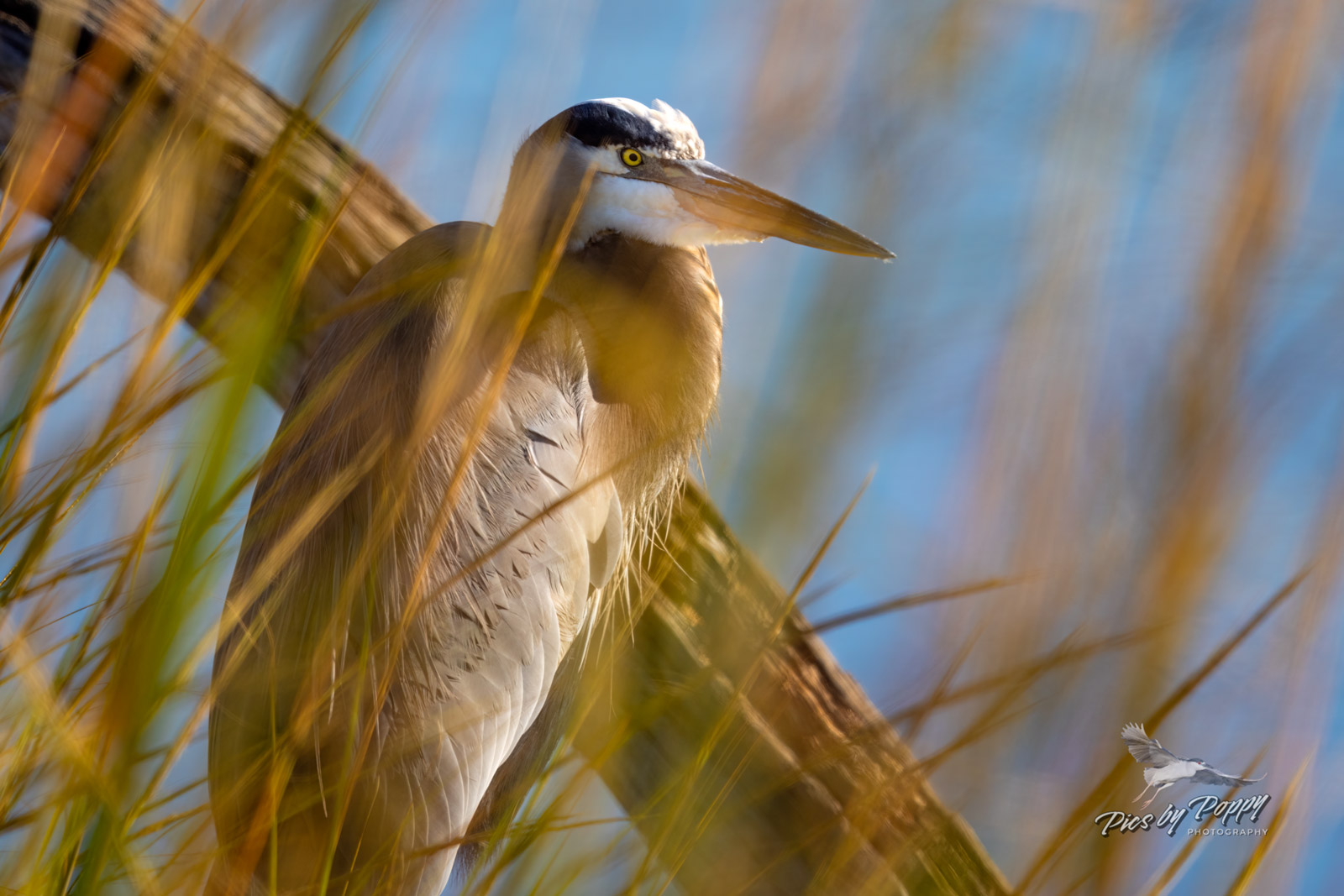
Through the Grasses, Bombay Hook NWR

If you have read any of my other blogs, you will know that one of my wife’s and my favorite local wildlife refuges is Bombay Hook NWR. We try and get up to Bombay Hook at least twice a year, focusing on the spring and fall time when activity is high, temperatures are mild, and insect activity is low. Come on, who wants to deal with biting flies and mosquitoes when you are looking for peace and tranquility? We sure don’t. Side story… the first time I took my wife, Kathy to Bombay Hook, it was July, and it was a very hot and humid day. I still remember stopping at the Raymond Observation Tower Trail, right after we arrived at the refuge. We were not 20 yards down the trail before the biting flies were so bad we had to turn around and get back to the car, running all the way. They had Kathy surrounded, flying all around her head and face, biting and practically flying in her mouth. As you can imagine, she was not happy. Thank goodness, heavy doses of bug spray and some additional light clothing made the rest of the day far more manageable. It was a lesson learned in our early nature adventures on better preparation and planning before heading to some of our favorite wildlife locations.

During the late summer and fall months, after the long season of warmer months, the Bombay Hook foliage and grasses can grow very long and tall. This adds to the beautiful landscape and scenery of Bombay Hook as everywhere you look; you see fields and areas of lush plant life and the amazing colors and textures they bring. As a wildlife photographer, this same foliage can be a hinderance as it can block areas of the refuge, like the shoreline or lower water ways where birds and other wildlife tend to gather. I remember years past frustrations when I could hear or partially see wildlife activity but have no clear line of sight or angle to capture the wildlife. So, I had some other ideas on how to make the foreground grasses and foliage part of my captures in more interesting and creative ways.
Given Lemons, Let’s Make Some Lemonade

I love taking portraits of birds and other wildlife, but after capturing many portraits of various birds’ and wildlife species, you find there are only so many ways you can capture a portrait of an animal and not produce the typical portrait shot. Simple portraits can be quite beautiful, but often it does not offer some of the more interest producing captures that can create deep emotional or wow type reactions from the viewer.

A few years back on one of our trips to Bombay Hook, the refuge had a higher-than-average growth of grasses, plants, and area foliage, and I had a very hard time gaining access to a good portion of the water areas and shoreline. Everywhere I looked, the grasses, reeds and area plant life were lush and tall, completely blocking many of the areas I would typically scout when looking for wildlife. So, after placing my frustration aside, I decided to start using the surrounding foliage instead of avoiding it. I began playing with and using the foreground grasses and plant life in creative ways to create new and different views, scenes, and portraits. In some cases, I would look for interesting trees or plants that I could use as fun textures or shapes that would add visual interest to my shots. Or foliage with striking colors that would compliment or add contrast to the wildlife subject. In other cases, tall thick grasses that I could shoot through, creating some dreamy, blurred effects or interesting intersecting lines that would put emphasis on certain parts of the image to draw the viewer’s eye. In the end, the possibilities were endless, and I was left to my imagination and creativity to compose interesting and fun images of my subjects. After practicing this technique for a while, I really started to have fun with it and started to appreciate how the surrounding habitat and landscape really helped tell more of a story with my wildlife images. Over time, I found myself looking for scenes, shots or compositions that included the habitat our wildlife friends call their home; sometimes in creative ways, but in other cases just to show these amazing subjects as they live in their environment.


Jay Whipple
I am in my 50's and happily married with 5 daughters from our blended family. I became interested in photography just a few short years ago, much later in life than many but my passion is strong. I started out experimenting with scenic mountain shots, landscapes, flowers and anything nature as being outside is where I am happiest.
Leave a Comment
We value your privacy, and will never sell or share your personal info. Your email Address will NOT be displayed.